CHIPMAN CORNER: ACADIAN, PLANTER ROOTS (April 8/14)

To many of us, Chipman Corner is an intersection, an area where  flashing lights and stop signs mark where Middle dyke Road crosses Church Street. Motorists never notice the old cemetery tucked away in the northeast corner of the intersection.  And I’d be surprised if anyone realises the community they drive through daily is one of the most historic areas of Kings County.

Chipman Corner may be a modest little community with roughly defined borders, but Acadian and Planter roots are deep.    The community is bounded on one side by dykes, which were started centuries ago by the Acadians.  Chipman Corner originally was an Acadian hamlet.  In fact, the entire general area north and roughly northeast of Kentville was an Acadian settlement known as Riviere aux Canards.

As for Chipman Corner being “historic,” as I claimed above, let’s look at the records.  An Acadian church once stood about where the cemetery is today.  Tragically, this was burned down during the expulsion.  Later, the Planters built a church, long since demolished, on the same site.  The cemetery has the distinction of being one of the oldest in Nova Scotia and possibly one of the oldest in Canada.  Beginning with the Acadians, Chipman Corner can also claim to be one of the oldest European settlements in Nova Scotia.

Here as well settled the Chipmans, a family destined to play a prominent role in county life for generations.  After the expulsion, Handley Chipman was the first of his family to settle in the area that was to bear his name.  Handley arrived in 1761 and built the house that still stands today near the intersection.  Regarding the importance of the Chipmans and their influence in religious, educational and political circles, we need only turn to the words of Arthur W. H. Eaton in his history of Kings County.  Eaton writes that “from the arrival …. of the New England Planters, the Chipman family has occupied a foremost place.”

Besides a long write-up in his family sketches, Eaton’s history has 20 entries for the Chipmans, making it one of the better sources for information on a prominent family who now only have a corner named after them.  James Doyle Davison’s book – Handley Chipmans, Kings County Planter – is another excellent source for anyone interested in the Chipmans.   James Fry’s book, Sketch of Chipman Corner, published in 1985 by the Kings Historical Society, not only salutes the Chipmans but is also a well-researched history of the corner from the Acadian period until recent times.   All three books are available for perusal at the Kings Courthouse Museum.

Now that you’re aware of Chipman Corner’s significance, and how important it is historically, perhaps the next time you drive through the intersection you’ll look around.   If you approached the intersection from the south, along Middle Dyke Road, you will have passed Handley Chipman’s home just before you reached the stop sign.  Picture as you drive by the Acadian church – and the Planter church – that once stood on the cemetery grounds.  Picture the Acadian homes that were once scattered along the road there in every direction from the intersection.  Then you’ll understand why Chipman Corner is rightfully said to be historical, meaning, of course, being of or concerning our history.
CANARD RIVER KEEPS ITS SECRETS – FOR NOW (March 17/14)

“The Canard River is holding on to her secrets for now,” says Kelly Bourassa.  At least one of its secrets he could have added – the exact site of a long ago shipwreck in the Canard River.

Bourassa is referring to recent efforts to determine where the brigantine Montague went aground in the Canard River late in 1760.  The chairman of a Kings Historical Society committee formed to locate the Montague and to produce a historical documentary on the shipwreck, Bourassa concludes the search was only partially successful.

The documentary is another story.  The video on the shipwreck has been completed.  I’ll tell you more about that shortly, but first, more on the search for the Montague and some historical nuggets the research unearthed.

While the place where the Montague capsized on the Canard was never found, at least not with any certainty, the research revealed some little known glimpses of early Planter life.  The Montague committee spent months digging into records in the archives in Halifax, delving into out-of-print books written around the time period relevant to the Montague’s sinking, looking at shipwreck records and interviewing people with an intimate knowledge of sailing ship history and the Canard dikes.  Among the marine experts interviewed for the video was Dan Conlin, curator of the Marine Museum of the Atlantic in Halifax.  Interviews with former dyke warden Jim Borden, Kentville, also are featured in the video, along with ships of sail historian and author Joey Patterson of Hantsport.

I participated in some of the research and took part as a bit player in the filming of the video.  Which, by the way, was filmed and produced by Stephen Wilsack of Innovative Systems.  What I found interesting was the court case resulting when locals attempted to illegally salvage the Montague after it went down in the Canard River.  The case involved a few influential Planters, some of whom made the history books. The storied career of the Montague’s captain, Jeremiah Rogers, who was a privateer and later a settler in Kings County, was also discovered during the research.  Rogers, it could be said, was a hard luck skipper who was involved in more than one shipwreck while a captain.

But you can discover all of this for yourself and you don’t have to wait until the video is shown on the history channel.  The premiere of the video will take place this spring in Wolfville as a fund raiser for the Kings Historical Society.  Miss it and you miss out on glimpsing one of the most fascinating periods, the early Planter period, in the history of Kings County.

“THE IRISH STARTED THIS TOWN OF KENTVILLE” (March 4/14)

Celebrating March 17th

“We like to think the Irish started this town of Kentville,” a former Nova Scotia premier said at a function in the Cornwallis Inn.

As reported by the Advertiser’s then editor, Harold Woodman, Premier Gerald Regan immediately qualified this offhand remark.  “Well, at least the Irish helped get it started and helped keep it going,” he said.

There’s a grain of truth to this.  Of Irish ancestry himself (the Regans are descended from Irish royalty) the premier may have had in mind men like Henry Magee (1739-1806) a pioneer merchant in Kentville.  Magee was born in northern Ireland, emigrated to the States,  and as a loyalist during the American revolution, was given land grants here.  You’ll find his tombstone in Kentville’s Oak Grove Cemetery.

Magee opened the first store in Kentville, in 1788, and for decades he helped the town prosper.   At one time he probably was the town in essence since besides being a merchant king, he built a saw mill and a grist mill, the latter in the town.  A pioneer merchant, miller and trader, Magee’s influence was felt in the town and well beyond it.  Arthur W. H. Eaton saw fit to salute Magee in his history of Kings County and he’s been the subject of various historical profiles; all of which suggests he fits Premier Regan’s suggestion the Irish helped get Kentville get its start.

Then again, the premier may also have had in mind the Irishman William Redden (1815-1894).  As a builder, farmer, trader and miller, Redden had considerable influence on the early development of Kentville.  Like Magee, Redden is profiled by Eaton in the Kings County history.  Eaton’s sketch notes that a large part of residential Kentville owes is existence to Redden.  His obituary says Kentville’s material growth and prosperity is to a marked degree identified with Redden.  Many of the houses Redden constructed along Main Street still stand and, in fact, the street once was known as Redden Row.

When Kentville incorporated in 1886 an Irish descendant, James William Ryan, served on the first town council.  Ryan, one generation removed from Dublin, was the town’s fifth mayor, serving two terms in this position, the first 1894-1895, the second in 1913-1914. Along with his son, Robert Holden Ryan, the Ryans were prominent in town politics and the county militia.  Eaton’s county history has a number of references to the Ryans and both, like Magee and Redden, are part of Kentville’s little known  and unsung Irish element.

Now, on to another pioneer Kentville family out of Ireland.  James Lyons emigrated from Ireland in the early part of the 19th century and became prominent as an hotelier.  The Lyons, James and son Joseph, were hotel keepers, stagecoach operators, politicians and postmasters. Kentville historian Louis Comeau tells me James changed his Irish surname, possibly to conceal his Irish origin and Catholic religion.

James opened the Lyons Hotel in Kentville and along with his son, Joseph, owned and operated the Stagecoach Inn.  The Lyons also started a stagecoach line that ran from Kentville to Halifax.  Joseph has the distinction of being the Kentville postmaster for 48 years.  Gerald Lyons, KC, Joseph’s son, served as mayor of Kentville.

There are many others with Irish surnames who contributed to Kentville’s growth and prosperity over the years.   So while Premier Regan’s remark may have been said jokingly, it has, as I suggested, a bit of truth in it.

BEFORE ELECTRICITY – FARM LIFE IN THE 1930S (February 17/14)

Granny was born in the Wolfville hospital in early October, 1935.  She arrived at in a time when few rural areas had electricity, when horses and oxen did the heavy farm work and there were only a few automobiles and fewer radios and telephones.

Granny’s home on the family farm in White Rock was typical of most rural homesteads.  Electric wiring was years in the future when she was born, her house was heated with a wood furnace in the basement, a milk separator and an ice box stood in the kitchen – she remembers that when you cranked the separator “milk came out of one spout and cream out of the other.”  Butter was homemade. The staples of life, meat, vegetables and fruit were grown and raised on the farm or bartered from neighbours.

There was one appliance that could be considered a modern convenience when she arrived home.  Spearheaded by her grandfather who lived on the farm next door, her home was connected to a miniature telephone system.  As Granny recalls it, there were six or seven homes in the White Rock area connected by telephone.  The phones had been installed circa 1918 and were battery operated – you cranked the phone to make a call.

Granny’s uncle, who was born in 1911, published a book on White Rock as he remembers growing up there.  He said there were at least six homes were connected at first by telephone and they had cut and set up the poles themselves, strung the wire, installed the phones and were finally connected to the outside world.  The tiny system eventually hooked up to the Valley Telephone Company, which had started in Middleton in 1891 and expanded east to Kentville, Wolfville and the surrounding areas.

There was no electricity in her area of White Rock when Granny started school and homework was done on the kitchen table by the dim light of a kerosene lamp.  An Aladdin’s lamp, a precursor of the modern Coleman’s lantern, gave a brighter light but they were few and far between. Granny remembers that an Aladdin’s lamp lit the farmhouse her grandparents lived in nearby, occupying a table in what then was called a parlour and is now called a living room.

In 1920, two gentlemen by the name of Jodrey and Wright incorporated two separate electric companies in Kings County; one of the companies ran power lines into Granny’s home area and by the late 1930s most of White Rock had electricity; the kerosene lamps were stowed away in a closet, only to be lit again when storms cut the power off.

Granny’s grandfather was one of the first in White Rock to own an automobile.  However, there was no government ploughing in her early days on the farm so when the snows arrived the car was useless and was put in the barn for the winter.  Travel then was by horse drawn sleigh.  Granny recalls winters when she went to church and to many community events in a sleigh.

With the car in the garage and the horse busy with necessary farm work, it meant Granny walked to school, about three kilometres away, in the winter; she walked to school most of the time in the spring and fall as well.

These are some of the things Granny recalls about her early days on the farm. And when she tells her grandkids about those times, the looks she gets border on incredulity.

MOST MEMORABLE WINTER STORMS OF ALL (February 3/14)

A couple of snowstorms have proved troublesome here this winter.  But while they caused extended power outages all over the region, the storms were relatively minor, probably four or five on a scale of one to ten. Relatively minor, that is, when compared to blizzards and heavy snowfalls  hitting us in earlier times.  The kings of all storms may have been 1905’s “great outage.”  Then there was a storm centuries ago that arguably altered the history of this area and affected the way we live today.

But first a few words about a 1923 storm that tied up the railway for nearly a week:

In 1923 the railway line in Kings County was snow bound for days when a blizzard swept through the Valley.  Older residents of the county think of this storm as the blizzard of 1923.  “Some of your readers may recall this storm,” wrote Jean Calkin of Black Rock in a recent letter.  Calkin was born the year the blizzard struck and doesn’t remember it.  But the folklore she heard about the storm when growing up must have impressed her.  The late Leon Barron, who collected railroad folklore and artefacts as a hobby, told me the 1923 blizzard was close to being catastrophic since it closed the rail tracks for days.  The line between Kingsport and Kentville was especially hard hit, Barron said.  Even two engines behind the plow, with a third as backup, couldn’t clear the tracks of snow and the railroad had to call on communities along the line for assistance.

The Great Blockage

The storm known as the “Great Blockage of 1905” and the “King of Storms,” to give a couple of its names, began on a quiet day early in February. For about three weeks the storm rampaged through much of the Maritimes.  The Annapolis Valley was particularly hard hit since so many communities along the line depended on the railroad for food and fuel.   In her history of the Dominion Atlantic Railway Marguerite Woodworth wrote that the storm totally disrupted rail service throughout Nova Scotia, shutting it down in some areas for weeks.

A few personal accounts of the 1905 storm exist, but only a few.  Fortunately, people like the late Harry Pemberton recorded their experience with the 1905 storm so we have a record of what it was like. Pemberton was farming in Hants County when the storm struck this region, isolating entire Valley communities for weeks.  He kept a diary and recorded what happened when the storm tied up the entire Valley and it is bleak reading.

Harry Pemberton’s diary, which his family still has, and Jean Calkin’s recalling of blizzard folklore – she wrote a poem about the 1923 storm and its effect on the Cornwallis Valley Railway – are only a few of the written records extant on storms devastating this area.  There were many such weather events and while the 1905 storm must have been the most devastating to hit this region, another blizzard, while less known, had an effect that’s still felt today.

The 1747 Blizzard

In 1747 a February blizzard swept through Kings County, burying the tiny Acadian settlement of Grand Pre and most of eastern Nova Scotia under snowdrifts said to have been 12 to 16 feet deep in places.  Despite the blizzard, French forces were able to attack and slaughter British troops staying in homes around Grand Pre.  This event is known as the Noble massacre and to mark it the federal government erected a monument in Grand Pre.

“On February 11, 1747,” the monument inscription reads, “Grand Pre was the scene of a surprise attack on Col. Arthur Noble’s detachment of British troops from Massachusetts who were billeted in the houses of the inhabitants.  A French and Indian force under Coulon De Villiers broke into the British quarters at 3 a.m. during a blinding snowstorm and in the close fighting, Noble and about 70 of his men were killed ….”

Much has been written about the massacre but overlooked is that the storm and deep snows lulled Noble into not being sufficiently alert and a surprise attack was possible.

It isn’t often that a winter blizzard drastically affects the population of this area but it can be argued the storm in February of 1747 did.  No storm, no massacre.  And bottom line, perhaps no deportation.  The Acadians were suspected of aiding the French in the surprise attack.  When less than a decade later the fate of the Acadians was being decided, the Noble massacre must have been foremost in everyone’s mind.

A FAILED ATTEMPT TO HARNESS FUNDY TIDES (January 13/14)

In a way, a humorous remark attributed to Yogi Berra applies to announcement of yet another attempt to harness the Fundy tides.  You may think its déjà vu all over again if you heard that a tidal power project is proposed for the Bay of Fundy near Cape Split.

I say “another attempt” since developing tidal energy by harnessing the awesome Fundy tides has been tried before, the last time about a century ago; in 1916 to be exact and personnel at Acadia University were involved.  There are mysterious hints as well that plans to harness the Fundy tides, on paper at least, were developed even earlier, in 1908.

In 1916 a group called the Cape Split Development Company announced its formation; its grand plan was to generate power using unique turbines invented by Acadia University engineering professor, Ralph C. Clarkson.  Partnering with Clarkson was Acadia president Dr. George B. Cutten, a man who like Clarkson was obsessed with harnessing the Fundy tides.  Joining them from Acadia were Dr. William L. Archibald, Professor Alexander Sutherland and from Wolfville, former mayor T. L. Harvey.

Clarkson’s invention, a unique tide generated turbine he patented as the Clarkson Current Motor, was the key ingredient in harnessing Fundy’s tides. Once accomplished, the power generated was forecast to supply unlimited electric power for the entire province and potentially for all of the Maritimes.   Clarkson’s motor was tested, first by engineers in the States and then on the Gaspereau River and was found to be workable.

The general plan, outlined in the company’s prospectus and expounded on in publicity releases, was to use a combination of four Clarkson motors on the sea bed to power generators, which in turn would pump seawater into 200-million-litre power generating holding tanks at the top of Cape Split.  With the Clarkson motor apparently proving capable of the job, the Cape Split Development Company purchased land needed for the holding tanks and generating facilities.   The next step was an application to the government for a charter; this was granted immediately to the newly named Bay of Fundy Tide Power Company, authorizing it to proceed with its project at Cape Split.

Everything was now ready for the tidal power project to proceed and only financing stood in the way.  Clarkson and Cutten determined that the project would need financing to the tune $2.2 million.  A financial campaign was started shortly after the project was announced.  Initially the company raised $31,000 by selling shares but the financial campaign wagon faltered.   Despite the project’s huge potential no more than the $31,000 was raised and the company, forced to admit its failure, became inactive.   Eventually it wound up its affairs, paying shareholders $4.41 for each $50 share they had purchased.

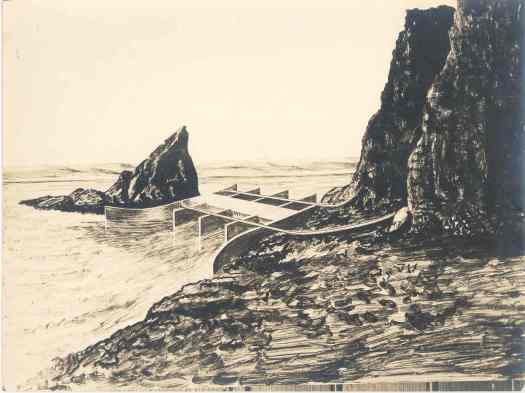
Cutten and Clarkson’s attempt to harness the Fundy tides wasn’t the first.  Documents discovered decades ago at Acadia University, dated 1908, indicated that a grand plan was made to span the Bay of Fundy from Cape Split to Spencers Island, a distance of about five kilometres.  Sketches in the document showed a causeway with dynamos that would generate electricity, along with a highway and train tracks.  This may have been a “paper plan” only since no other documents have been found indicating the project proceeded beyond this stage.

Artist's conception of harnessing Fundy tides

An artist’s conception of how turbines would be installed at the foot of Cape Split to generate electricity from Fundy tides.

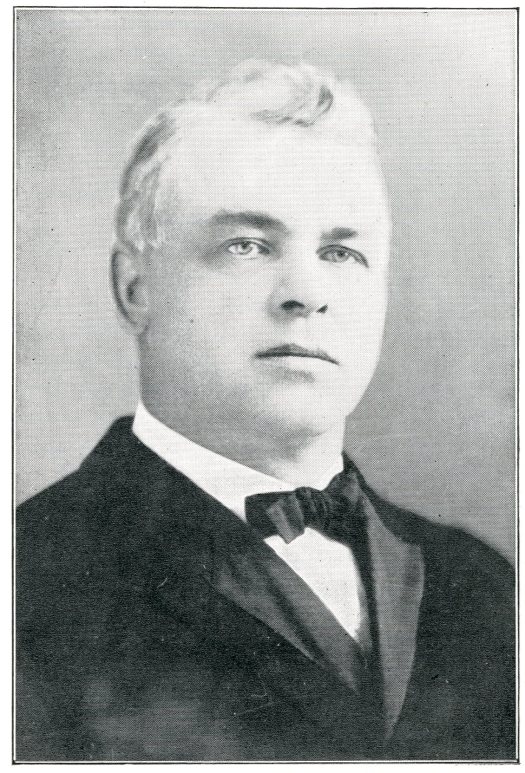
Acadia University president Dr. George B. Cutten

Acadia University president Dr. George B. Cutten was one of the main movers in the 1916 plan to harness the Fundy tides.

JANUARY WATERFOWLING IS A FIRST (January 13/14)

I was in a blind on a slight rise of ground with the dykes behind me, my decoys spread out in the snow. Wearing white camouflage and partially hidden by a snow drift, I hoped there was enough concealment to fool ducks. It was the third day of the extended season, and as far as I know the first time ever in Kings County for January puddle duck hunting.

Earlier I spotted ducks scattered all over the field I was set up in. By a small patch of standing corn the snow had been covered with ducks. Some were dropping into the corn, but most of the ducks were scattered over the field. Looking the situation over and after checking out the field a couple of times, I decided to set a blind up several hundred meters from the standing corn.

Now, if you’re a waterfowler, you undoubtedly see something wrong with the scenario I’ve described. If most of the ducks were feeding in the corn and the field around it, why was I set up so far away from the hotspot? Why wasn’t I down in the corn where it seemed a sure thing to bag a few ducks?

The answer is the hunting regulation that, in effect, says no one can hunt legally within 182 meters of a building. Nearby was a small outbuilding I estimated probably wasn’t legal shooting distance from the stand of corn. Maybe it was more than 182 meters from the outbuilding to the corn, maybe it wasn’t. I couldn’t tell for sure. Bottom line is that I didn’t want to chance running afoul of game wardens and have them decide I was legal or not. I stayed well away from the corn, setting up my blind where I knew I was okay and where I had permission to hunt. I was hoping of course to attract some of the ducks that were winging into the corn.

This didn’t happen. Not a single duck came my way. I was simply outdecoyed by all the birds feeding around the corn. I sat in that ditch four hours on the coldest days of the winter and watched a couple of hundred black ducks and mallards wing into the corn and ignore my decoys and calling.

That was my first January duck hunting experience but it wouldn’t be my last. Snowshoeing on the dykes in past winters I’d found that even when dykeland fields were covered with snow, ducks still came into them; some were feeding in corn stubbles, some apparently just resting. Like a lot of hunters I took advantage of this during the extended season this year and it was surprisingly good.

Summing up the short January season here, one hunter told me that to get some ducks “all you had to do was throw some decoys out on the snow and hide in a ditch.” Well, almost. I should have told him about the field I found, where there was standing corn hundreds of ducks visited every day. Why should I be the only one frustrated?

THE PHEASANT GAMES (January 6/14)

In one of my favourite upland hunting books by E. C. Janes, the author mentions a wily pheasant outwitting him by dodging around all three side of a big grassy field, dog in pursuit, before safely flushing.

In another of my books on hunting, the author, George Bird Evans, cautions to be quiet as possible pheasant hunting since nothing clears a covert of cock birds as fast as a human voice. Along the same line, we found the bells on our dogs alerted pheasants and they were flushing before we could get close. We did better when we removed the bells.

Now human brains are hundreds of times larger than pheasant brains and unquestionably thousands of times more intelligent. Yet we have experienced hunters apparently being outwitted by pheasants as per E. C. Janes, and pheasants that can put two and two together, apparently equating human voices and dog bells with imminent danger.

How could this be? The average human brain weighs on average 1,300 to 1,400 grams, or for those of us who still think pre-metric, about three pounds. The average brain weight of a ring-necked pheasant? About 4 grams or about 0.49384 parts of an ounce.

Amazing isn’t it. The rooster pheasant’s brain is a speck of dust compared to a human brain. Yet a bird with a brain that tiny occasionally stymies hunters? Now, don’t say this doesn’t happen. Every experienced hunter and more than a few tyros too, have their tales to tell of being bamboozled by ring-necked roosters.

The ring-necked pheasant is legendary for its wizardry in the field, both at skulking and hiding and by simply using manoeuvres that confuse hunters and their dogs. The bird is born cautious and super alert. Think, however, of all the times you’ve bagged pheasants easily, birds that held for the dog, birds that waited until you were close before flushing.

Now, most of the time those easy birds are taken early in the season. It’s a fact that most of the pheasants shot early are first year birds. Once educated, however, once they survive the early season massacre, pheasants became more difficult to pin down and put in the game bag. These pheasants learn quickly. They’re the birds that sometimes fool us and make pheasant hunting challenging.

Pheasants that survive into the second season become even more difficult to hunt. From vantage points I’ve watched roosters circle around my hunting companions and sneak off. Old, seasoned roosters often will run and refuse to flush until out of danger. Sometimes they refuse to fly even when a dog closes in on them. Four times this past fall my dog pointed on roosters that wouldn’t move, birds I actually had to kick out of the cover with my foot. Two of those roosters – undoubtedly old hunter-wise birds that sensed flying wasn’t an option – took off running and probably are still out there somewhere.

One of my friends coined a neat phrase that described what those crafty, long-lived roosters were capable of doing. “They’re playing games with us,” he said. “Pheasant games.”

WILD GAME FOR THE HOLIDAYS (December 16/13)

Jake, my bird dog, is almost 11 years and understandably isn’t as spry and energetic as he was a few seasons ago.  So when the last four days of the pheasant season turned bitterly cold and windy, I moved the thermostat up in Jake’s kennel heater and told him he was done for the season.  “The weather out there is for young dogs,” I said.

I’m sure – absolutely sure – Jake never understood a word of what I said.  But when a friend showed up later with his young dog to take me hunting, Jake came out into his run and began to yelp and to howl mournfully.  And they say dogs have no smarts whatsoever.

On my last hunt with Jake, just before the cold and snow arrived, I bagged a rooster with him, a pheasant he pointed staunchly – I had to flush the bird out of swamp grass – and he retrieved it nicely.  I didn’t know then but it would be our last rooster of the season.

As mentioned in a recent column, I hang pheasants I harvest before dressing them.  So when I got around to drawing and plucking the rooster three days later, the snow and bitter cold had arrived and Jake’s season was over.  I decided then that Jake’s final bird of the season would on the table during the holidays.  It’s been a tradition for some time at our house to cook up a wild game dish between Christmas and New Years.  Generally it’s pheasants or ducks, and over the years I’ve perfected a couple of recipes that bring out the flavour inherent in these game birds.  Other friends that hunt do the same thing, a game dish during the holidays being a tradition with them as well.

Occasionally I’ve offered readers my favourite wild game recipes in this column.  I won’t do that this year.  I’ve found most hunters usually have special ways to cook wild game; or their spouses do, which is the same thing.  In other words, everyone has their own preferences when cooking game and they might not prefer mine.

Some hunters like game cooked with basic, simple recipes, with no special sauces, herbs, spices, condiments, vegetables and so on added to the dish.  Then there are hunters who like their wild game frilled up with wine, sour cream and even beer.   I discovered to my surprise some time ago that black duck and canned tomatoes (or tomato paste) make for an excellent combination in a wild game dish.  No, I won’t give you a complete recipe.  Simply experiment with breast of duck roasted with tomatoes and onions and watch out how fast it disappears when served.  I also found that pheasants and sour cream, along with red wine and mushrooms, combine well.  Try these ingredients with pheasant breast but beware:  You’ll have to fight for your fair share.

One remark I often hear from hunters is that they don’t like eating wild duck.  In the past a couple of hunting companions often let me take all the ducks we harvested since they didn’t like them.  But once I told them how to prepare the ducks for the oven and they discovered how delicious they were, the days of my keeping all the ducks disappeared.

Not that I minded.  It can get tedious plucking and cleaning a lot of ducks.  On one hunt my brother and I bagged our limit of black ducks and mallards.  He insisted, since he didn’t care for eating ducks, that I take all of them. This was okay at first – until I had to pluck and clean those dozen ducks in an unheated shed on a cold December day.  After that experience we had a new rule for duck hunting – you shoot a duck, you keep it, pluck it and clean it.

But that’s enough of rambling on.  I’ll close with saying there’s something about dining on wild game, game you hunted and harvested, during the holiday season.  Maybe it’s because the game we harvest, be it venison, waterfowl or upland game, is a unique treat and it deserves a special time to enjoy it.

HANGING GAME BIRDS A TRADITION (December 3/13)

Seven days after we’d bagged several pheasants a friend told me his birds were still hanging in his shed.  “I always hang my birds a while before cleaning and plucking them,” he said.

While I wasn’t surprised the friend was hanging birds before cleaning them, the length of time he’d left them in his shed raised an eyebrow.  Hanging game birds, generally to age and tenderise them and to enhance their flavour, is a traditional practice, one that harks back to the old country.  But from what I’ve been told by people who hang game birds, four or five days might be the limit, especially if the temperature fluctuates wildly, as it often does here through November.

A couple of my hunting acquaintances hang game birds, and that includes everything they bag – pheasants, grouse, waterfowl and woodcock. One friend has screened boxes large enough to accommodate four or five pheasants or ducks.  He hangs what he bags in the boxes, undrawn and the feathers on for three to four days if the temperature remains constantly cool.

Now, hanging birds with the innards in them for several days may not appeal to you at first, but think about it for a minute.  The beef you buy at the grocers is aged.  Bag a deer and if it’s a big, old buck you definitely are going to hang it for a few days.  My father always hung deer for a few days, and young venison for short periods.  As I recall, older, tougher bucks were hung at least four or five days.  “It takes the toughness out of them,” my father used to say.

Outside of the couple of friends I mentioned, no one I know of hangs game birds today.  I usually get odd reactions when I bring up the topic of hanging game when I talk with other hunters.  “I heard of it but never do it” is a common reaction, along with “what are you talking about?”

With the majority of hunters it’s shoot that bird, clean and pluck it quickly, put it in the freezer until it’s time to do some cooking.   As I mentioned, it’s an old world tradition, familiar to many but practiced by few.

As for me, I hang pheasants and ducks for a couple of days but only if they haven’t been shot up much.  I found that hanging some game birds improved their flavour somewhat.  Some of the best tasting ducks and woodcock I ever ate were left hanging undrawn and unplucked for four to five days.  Once I experimented with woodcock by hanging them in my cold room for a week.  At the end of the week the birds had softened some but had a clean smell when gutted.   To this day I’ve never tasted woodcock any better than those birds; the hanging really enhanced their flavour.

There’s a bit of science behind hanging game birds by the way.  An important ingredient is the hanging temperature.  Some game cook books, the older editions especially, discuss the proper way to hang birds and offer plenty of tips. Two of the five wild game cook books I have recommended it’s best to hang birds for at least three days when the temperature is steady, say between 50 and 55 degrees Fahrenheit.

It’s a bit of bother to hang birds and I suspect hunters familiar with it simply don’t bother because of all the rigmarole.  The practice seems to go against everything we’ve been taught about handling meat and fowl carefully due to bacteria.  The fear of e. coli bacteria looms when the topic of hanging game birds comes up, stopping most hunters from thinking seriously about it.