A HISTORY BEGGING TO BE WRITTEN (August 1/97)

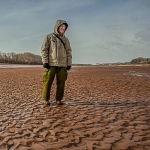
At first glance, it might seem ridiculous to compare the Cornwallis River with the St. Lawrence, the former being a mere trickle compared to its mightier big brother.

Yet from a historical point of view, there are similarities. Both rivers played important roles in colonization. And while the Cornwallis had a minor role in a relatively minor region of Canada, it was of major importance to the first settlers and the people that followed them.

Much has been written about the St. Lawrence River; much more than will ever be written about the Cornwallis. Regretfully, no one has penned a history of the Cornwallis and the people who toi1ed by it, and had their lives molded by the river over the centuries. It’s a story that should be told and it would be an interesting tale.

Again compared to the St. Lawrence, a history of the Cornwallis would be rather uneventful; as uneventful perhaps as the quiet rising of the river in a bog near Aylesford and its pastoral flow to the Minas Basin. But let’s put the Cornwallis in perspective and reveal its true character. Collected from various sources, the assortment of trivia and quotes that follow lend credence to what I said above about the river.

“The Cornwallis (River) should have a book of its own, and perhaps the History of Kings County may be considered primarily a book on the Cornwallis, for the townships of Horton and Cornwallis, on the south and north sides of the river, and the settlers in each, and what those settlers did, constitute the major part of Arthur Wentworth Hamilton Eaton’s history.” Esther Clark Wright in Blomidon Rose.

“We know the Micmacs roamed the area now Port Williams. Artifacts have been found on the banks of the Cornwallis River south of the Prescott House. There was also an Indian camp on the river…south of the house occupied by Eric Hatt. This is thought to have also been a burying ground,” From the Port Williams history, The Port Remembers.

The Micmac name for the Cornwallis River was Chijekwtook, meaning a deep, narrow river. When Champlain explored the Minas Basin, he named the Cornwallis the St. Antoine. The Acadians later called the river the Grand Habitant. – From various sources.

“Halifax, 20 August A.D. 1778. Memorial of John Burbidge to Govr. Richard Hughes on behalf of himself and many of the principal inhabitants of Kings County. Honorably sheweth that on the night between 9 and 10 August at Cornwallis in said county, some whaleboats came up the Cornwallis River with between 30-40 armed men invaded and plundered the house of Wm. Best Esq. in said Township of everything valuable of easy carriage, they took in cash and other effects to the amount of 1000 pounds and upwards.” – Nova Scotia Archives. This raid by American privateers took place close to Kentville.

“As new lands for settlement were wanted, some of the inhabitants (Acadians) went up the Cornwallis River and found a place that seemed curiously familiar. There was a piece of marsh resembling Grand Pre with Oak Island lying outside it. On the edge (of the river) was a similar chance for settlement to that furnished by…Grand Pre. They therefore put in short dykes…built some houses and called their settlement New Minas.” – Eaton’s History of Kings County.

LEGION WORKS LONG AND HARD FOR VETS (July 25/97)

“In the shock and isolation of adjustment (upon returning to Canada after the First World War) the veterans turned to soldiers’ clubs and regimental associations to recapture the camaraderie and sense of purpose they had known in the forces.”

From the book marking their Diamond Jubilee, this quote reveals in a few words the origin of the largest organisation in Canada. The Royal Canadian Legion had its beginning in clubs and associations that probably first met to socialise and reminisce, but eventually began to concentrate on problems faced by veterans.

“At first the prime concerns were decent hospitals and proper treatment for the war-wounded,” reads the Diamond Jubilee book. “But soon longer-term issues came to the fore: pensions, war allowances, the care of the dependants of the dead and the disabled…and the federal legislation to govern all this.”

Early veteran’s groups were numerous, some dealing with specific war-related problems, while other associations were formed from military branches. The most prominent group was the Great War Veterans Association (GWVA) which existed from 1917 to 1926. Mainly through the efforts of the GWVA the various veteran groups and associations were unified into one body. At a national conference in 1925 the Canadian Legion of the British Empire Service League was formed. A charter was granted by the secretary of state the following year, giving the Legion official status. Just over three decades later the Queen assented to the addition of “Royal” to the organisation’s name and it became the Royal Canadian Legion.

From a scattering of veteran groups, with no more than a few thousand members in 1921, the Legion today is now over 600,000 strong and has branches in most major population areas. In this newspaper’s circulation area, for example, there are branches in Kentville, Wolfville, Windsor, Hantsport, Berwick, Kingston, Middleton and on down the Valley.

From its inception the Legion has worked long and hard on behalf of veterans. An example of its efforts is the Department of Veterans Affairs, formed after the Legion convinced Ottawa that veterans’ interests would better be served by one special department.

However, while efforts on behalf of veterans continue, today’s Legion is also a major contributor to society in other areas. The ongoing efforts of the Kentville branch (Kings Branch #6) to raise and donate funds to worthy enterprises is a typical example of the good work the Legion does in similar communities across Canada.

In an average year the Kentville Legion contributes thousands of dollars in support of various organisations, charities, schools and individuals in need of assistance. Some $6,000 was distributed to Kings County schools as scholarships and bursaries this year, for example. The branch makes major donations to the V.O.N. ($11,000 in the past two years) sponsors the local Army Cadet band ($3,500 annually) and provided equipment valued at $20,000 to the Valley Regional Hospital. In the first six months of 1997 alone, 19 other charitable groups, clubs, schools and associations in the area received financial support from the Kentville branch.

MORE ON SAGA OF KLONDIKE WARD (July 18/97)

When Ward’s Mansion was destroyed by fire in 1965, a newspaper report called the building a “colourful Kentville landmark.” Built sometime around 1904, the mansion had “stood guard high over Kentville for over half a century,” said another newspaper account of the fire.

A column two weeks ago on Klondike Ward barely delved into his story. I used a lengthy obituary from a 1934 Advertiser as my source but many of the facts about the famous mansion weren’t there (the date of its construction, for example.) However, thanks to a call from Marie Bishop, I am able to expand some of the Klondike Ward story. Ms. Bishop told me she had helped in the preparation of a paper on Ward and his family and a copy was on file at the museum in Kentville.

The Klondike Ward story deserves more than a couple of my columns in this newspaper and a brief document stored in a museum. Ward obviously was a Kentville builder and he should be recognised in some way. Perhaps the efforts of this columnist will spark enough interest to get something started.

Anyway, more on the Ward saga. Here are some gleanings from the document on file at the Old Kings Courthouse Museum.

Klondike Ward was an adventurous man. He struck out on his own while a youth, journeying to the United States where he served for a while in the U.S. Marines. Ward joined the R.C.M.P. in 1890 when he was 26 and was posted to the Klondike area of the Yukon. A few years after Ward’s arrival gold was discovered in the Klondike. Ward went prospecting with a friend and in the words of the museum document, “found enough gold to buy his way out of the Mounties.”

Ward returned to Kentville in 1899, apparently a wealthy man. He married a banker’s daughter, Elizabeth Redden, and took her back to the Klondike (where they lived in a log cabin) for another four or five years of prospecting. There he was joined by his brothers, Norman, Winnifred and Nathan.

By 1904 Ward was back in Kentville (where a daughter Evelyn was born) and he began a period of construction. The area in Kentville known simply as the Klondike (I was unable to discover when the spelling was changed) was named after Ward perhaps because he developed it and constructed several of the first homes in this area. There is mention that Ward backed the construction of several major commercial buildings in Kentville but there were no details in the museum paper.

Ward began construction of his Prospect Avenue mansion at this time, sparing no expense in the building of it. One of the bedrooms was furnished with a mahogany suite shipped from Jamaica, for example. On record is Ward’s reply when he was asked why he was building so fancy a home. He said, “I had a little extra money and it will be nice to leave a memorial to the family.”

Elizabeth Ward died in 1924 at an Ontario sanitorium. Ward survived his wife by only 10 years but he was married again to an American, Florence Benner. After his death, Ward’s widow opened the mansion “as a home away from home for the troops stationed at Aldershot Camp.” Florence died in 1957.

SOMETHING ABOUT THE “GOOD OLD DAYS” (July 11/97)

It doesn’t take much prompting for people to tell you what life was like when they were young. “Prod an old-timer,” someone once said “and you’ll discover a potpourri of nostalgia, yearning for the ‘good old days’ and a tendency to compare things now with what they were in their generation.”

I haven’t prompted or prodded many old-timers, but I enjoy hearing them reminisce about life when they were young men and women. There’s something about the lifestyle of past generations that fascinates people. Run an old photograph in this paper, for example, and reader interest will be high. People like to see old pictures and they literally eat up old-time tales.

Understanding or explaining this interest is impossible. Like most people I like to look at old photos and artifacts and I enjoy old-time accounts. I can’t tell you why. I’ve never been able to fathom why these things are fascinating, so there’s no way I can explain why others have the same interest.

On the whole, people may believe life was simpler, less stressful, and definitely less costly in the old days; thus the widespread interest in earlier times may simply be the result of a desire to have lived in them. Obviously it’s difficult for people today to truly prove life was simpler and better in earlier times. An 18th century citizen of the Annapolis Valley may have had problems and pressures that would seem trivial today. There is little doubt, however, that the cost of living seemed to be lower a generation or two ago. As a matter of fact, prices of food and clothing were extremely low no more than five or six decades ago. For proof let’s turn to an issue of this newspaper for November, 1934, and a look at prices.

First of all, many popular brand name food products on grocery shelves today were available 60 years ago. But what a huge difference in prices then and now. Brunswick sardines, for example, were six tins for 25 cents. Heinz tomato catsup was 21 cents a bottle. Heinz tomato soup and spaghetti sold two tins for 27 cents. A half pound tin of Fry’s cocoa was 21 cents. Ivory soap sold at three cakes for 13 cents.

It looks like the dollar had more buying power in 1934. The above items were found in grocery ads for two Kentville stores, which also offered unbelievably low meat prices. Bacon for 35 cents a pound. Smoked picnics 21 cents a pound. Spareribs 15 cents a pound. Kippered herring three for 20 cents. Canned lobster 22 cents a tin.

In 1934 gents could purchase good quality overcoats from L.W. Phinney’s store for $15. A. G. Hiltz Dry Goods was offering wool dresses under 10 dollars. Lockharts had men’s nightgowns and pyjamas for $1.50 a pair and lined gloves for $1.

While The Advertiser issue I’m quoting from was printed over half a century ago, some things haven’t changed. As they do today, church and community groups were fundraising with seasonal suppers. An annual church chicken supper was advertised. The community of Scott’s Bay was hosting a harvest supper. And the forerunner of our popular flea markets, the rummage sale, was very much in evidence.

WARD’S MANSION – HOUSE OF MYSTERY (July 4/97)

Ward’s Mansion loomed on a rise of land above Prospect Avenue on the southern edge of Kentville, a sentinel guarding the Cornwallis River Valley. It was a house of mystery when I was growing up around Kentville and I spent hours looking at it from my bedroom window with my old telescope. I don’t now what I expected to see – ghosts, lights, maybe Klondike Ward himself, who was said to haunt the building that was once a Kentville landmark.

Before he died in 1934, Klondike Ward planned to convert his mansion into a summer hotel. The remodelling was almost completed when Ward died suddenly at age 70. While he bad been in poor health of years, his condition wasn’t believed to be serious and his death was unexpected.

When I was growing up in the ’40s, Ward’s mansion was abandoned and it was in this period that rumours and stories about ghosts and “strange happenings” were circulated. There was just enough mystery about the mansion and Ward for some of the rumours to be taken as fact. According to newspaper stories of the period, Ward’s death had halted the conversion of his residence into a hotel. However, the story going around was that Ward lost the gold he had discovered in the far north and, being bankrupt, had been unable to complete the building of his mansion. His sudden death was attributed to the loss of his gold.

The only truth to this story was that Ward had struck gold in the Klondike and returned to Kentville a rich man. Born in North Alton, Ward joined the Northwest Mounted Police at an early age and served in the Canadian west. A page one story on his death, published in the Nov. 8, 1934 issue of The Advertiser, said that Ward quickly rose to the rank of Corporal and then “retired from the Mounties to respond to the lure of gold.”

Many men prospered during the Klondike gold rush days in the Yukon, which began in 1897. An estimated $100,000,000 was obtained from the placer deposits of the Klondike between 1897 and 1904 and Ward was one of the lucky ones. He would have been in his thirties when gold was discovered and was probably serving at the time with the detachment of the Northwest Mounted that was established in the Yukon in 1895.

Ward eventually returned to Kentville after finding gold and married a local girl. For years after, he invested in Kentville real estate and, in the words of The Advertiser obituary, “business blocks and residences stand as a monument to his faith in the development of the town.” I was unable to determine when Ward began construction of his mansion, but shortly after it was completed his wife died. Ward later became a world traveller and, perhaps saddened by his wife’s death, never spent much time at the fabulous mansion he built for her at the top of Prospect Street.

Ward’s mansion apparently stood vacant for years until Ward returned with a new wife. After his death, the mansion was again vacant for a long period. It was in this latter period that the tales of strange occurrences and hauntings began to circulate. For me, Klondike Ward and his mansion were mysteries. Through the 1934 tribute to Ward in The Advertiser I learned that the mystery man was actually one of Kentville’s most prominent citizens and his mansion its most famous landmark.

ACADIAN HERITAGE IS EVERYWHERE (June 27/97)

While there is a tendency to glorify the Planters and Loyalists, we cannot realistically deny that the Acadians have influenced life here in numerous ways. The Acadians have put their stamp on agriculture, on place names and on our culture, for example, and this is evident anywhere we care to look.

The Acadian era is one of the most fascinating, most troubled and most tragic periods in Nova Scotia history.

There is little doubt that the Acadians were used as pawns in the struggle between England and France, but it isn’t the purpose of this column to dredge up ancient wrongs. Instead, from a file to which I’ve been adding bits and pieces of info for years, here are some glimpses of the Acadians and the Acadian period.

Piere Melanson, who may have given his name to the community of Melanson on the Gaspereau River, founded Grand Pre in 1682. Melanson, along with his wife and other young Acadian couples, migrated to Grand Pre from Port Royal. Grand Pre soon became the largest Acadian settlement in Nova Scotia. By the early 18th century, the majority of Acadians were living around Grand Pre, the population peaking at about 5,000.

Where they were first constructed isn’t known for sure, but the Acadians were building dykes in Nova Scotia at least as early as 1640. The reclamation of salt marshes by the Acadians is said to be the most distinctive characteristic of Acadian culture. By 1710 the Acadians had built dykes and aboiteaus on all the marshlands bordering the Minas Basin.

The Acadians are believed to have been limited when it came to agriculture, but this isn’t true. Besides producing sizeable wheat crops, the Acadians grew cabbages, turnips, beans, onions, peas, corn and several varieties of apples. For meat, the Acadians raised beef pigs, sheep and poultry. The Acadians also harvested and ate a variety of fresh and saltwater fish – journals from Acadian times mention smelts, flounder, gaspereaux, shad, bass, eels, salmon and trout. Archaeological evidence indicates that in some areas the Acadians supplemented their diet with wild game.

One Acadian fishing technique, the weir, may have been learned from the Micmacs. The Acadians referred to the weirs as nijagan, a Micmac word. Weir-fishing was also practiced by the Planters, Loyalists and other later settlers and one cannot help wonder if they learned this method from the Acadians.

More Acadians were deported from Grand Pre than from other areas because it was the most populated of all the settlements. About 2,200 Acadians were rounded up and deported from the greater Grand Pre area, which included present day Wolfville, Horton and Canard. An estimated 6,000 Acadians were deported from mainland Nova Scotia in 1755.

Grand Pre has become the symbol of Acadian expulsion, but the deportations actually began earlier in another area. After capturing Fort Beausejour (Cumberland) at Chignecto, the British rounded up the Acadian inhabitants of the area and shipped them to colonies on the eastern seaboard. The Grand Pre deportation began a month later.

A LETTER FROM GARY KASPAROV (June 20/97)

“Dear Edwin,” the message began, “I would like to thank you very much for coming by the Club Kasparov website and taking time to register with us.”

I felt flattered. World chess champion Gary Kasparov e-mailing a personal note to yours truly brought elation… but only for a moment. I realised immediately that the message coming through my computer was the electronic equivalent of bulk mail. My name was on the email list and I received the message, probably along with thousands of other chess fans.

Now that I’ve put what silly old me first thought was a personal letter from the world champion in perspective, I must add that electronic bulk mail or not, the missive from Kasparov was revealing. The match versus Deep Blue, the most advanced computer of this age, was followed world-wide by chess players and non-players alike – most of whom were shocked when Kasparov was trounced.

Interviewed on television after the match, Kasparov acted like a poor sport. After his childish tirade, it would be interesting to see what he would have to say about the match when he had a chance to settle down and accept his defeat. Fans who had registered with the match web-site were told they would be favoured by Kasparov’s insights and these comments were eagerly awaited.

First of all, it is obvious from pre-match comments and Kasparov’s post-match letter that he didn’t expect to lose.

And it would seem from Kasparov’s comments that he lost the match because the computer surprised him by playing like a human rather than a machine. “What threw me off were some of the moves made by Deep Blue, which a normal computer would never make,” Kasparov said. “Machines usually don’t play some of the moves that were made in the match.”

Kasparov intimated that Deep Blue exhibited near human intelligence and an uncanny ability to adjust to changing game conditions. This apparently rattled him. Kasparov approached the match as if he was playing a machine; and he played in what best can be described as a man versus machine style. This wasn’t good enough for the computer, which must be the most refined electronic intelligence on the planet today.

What also may have rattled Kasparov is that he trusted the computer and, as a result, lost game two. In this game, Kasparov resigned in a drawn position because he assumed the computer had calculated correctly and he was lost. Immediately after he resigned, chess players from around the world e-mailed the drawing moves on the match site. “How can a machine which is able to see 20 ply (half moves) ahead miss a perpetual check?” Kasparov wailed.

Mr. Kasparov wants to play Deep Blue again – “I just challenged IBM for a rematch to take place later this year under slightly different conditions,” he said.

Different conditions? Yes. Kasparov wants the next match set up as if it were human versus human. First, the computer must play practice games Kasparov can study and a panel of humans must supervise the match and Deep Blue so there are “no suspicions whatsoever.” Kasparov didn’t say whether he expects Deep Blue to shake hands at the start of the match.

SKODA AND OTHER VALLEY MEDICINES (June 13/97)

Until Leon Barron brought out the Skoda bottle, I had never heard of the old patent medicine and bottling company.

“Skoda operated in Wolfville at one time, probably over a hundred years ago,” Barron explained when he showed me the bottle he had picked up at a flea market.

“There was even a ship by the same name sailing out of Wolfville, but I’m not sure what the connection is with the Skoda Company.”

In the old days, meaning at least a century ago, people must have been totally dependent on so-called patent medicines. For the most part, these medicines were concocted and purveyed locally and treated every common illness than known to man.

Some patent medicines, perhaps the most effective, were promoted province-wide as well as nationally. And if the preponderance of medicinal ads in old newspapers is any indication, it must have been profitable treating grandpappy’s aches and sniffles. Our grandparents were apparently obsessed with their minor ailments and kept the medicine companies in business.

A few of the over-the-counter medicines marketed at the turn of the century – the ones that actually worked – are still on drugstore shelves today. One of the most effective and best-known is Minards Liniment, which may have originated in Yarmouth. According to the early ads for Minards, the liniment could be used for treating illness in both man and beast. I can vouch from experience that Minards worked wonders on chest and head colds – one sniff cleared your head instantly – and usually soothed the sprains and pains suffered in boyhood.

As mentioned, I had never heard of the Skoda Company until Leon Barren showed me one of their bottles. The legend on the bottle indicates it once contained sarsaparilla, a popular beverage in grandpappy’s day, but Barron has evidence that Skoda also produced patent medicines.

My curiosity about Skoda whetted, I quickly found evidence that Leon was right. Originally out of Belfast, Maine, the Skoda Discovery Company opened for business in Wolfville in 1890 or 1891, building a four-story factory near the current town library. Skoda prepared and bottled sarsaparilla in their first year of operation and in 1892 branched out into the production and sale of patent medicines. In Barron’s collection is an 1893 advertisement for Skoda in which a well-known doctor endorses their medicines.

There was a vessel called Skoda, probably named so due to some connection between its owner and the bottler. Barron recalls a photograph of the barquentine tied up at a wharf with the Skoda factory in the background, and the name on the vessel and the factory sign quite evident.

Competition from other patent medicines may have been too stiff or possibly their products weren’t effective. Whatever the explanation, within a few years of opening the Skoda pills and elixirs were no longer available and the company was out of the bottling business. Numerous other patent medicines were still available at the time, however. Recently, I looked through the pages of a newspaper from the Skoda period and counted 43 patent medicine ads.

THE SOUND OF YELLOW (June 6/97)

He came to Kentville on Saturdays during summer and begged for coins at the base of the old brick post office on Aberdeen Street. Blind, grey-haired, raggedly dressed, he may have been crippled as well. Not once did I see him on his feet. He sat on the sidewalk caressing a battered piano accordion, wheezing out a tune on it whenever someone dropped a coin in his tin.

He wasn’t a particularly good player. I was learning the accordion at the time and had a reasonable idea of how it should be played. The old man fumbled with the keys and mangled his melodies. Occasionally I recognised a tune he played, but for the most part he just pumped the bellows and randomly fingered the bass buttons and keys.

Even though his music was off-key, I often stopped to listen to the blind man play. What attracted me was his patter. Between tunes and while playing he talked to himself, saying the strangest things. “Drop a nickel an’ I’ll play my green song,” he once said when he heard me approach. “Hear that (train) whistle? its sound is yellow,” he’d say. A truck would rattle by. “Red,” he’d mumble. “That’s red.” When he heard crows and seagulls he muttered about colours. Once when a sparrow trilled nearby he said, “that bird’s singin’ in blue.”

At first I thought the blind man had a few bricks missing. I finally decided he was making a game of associating sound with colours. Train whistles were yellow, seagull cries were blue and soon. The possibility that the old man suffered from a rare condition never occurred to me. Even later when a musician called Tom also described tunes in various colours, I never realised they had something in common.

I liked the old beggar, I thought Tom was making a game out of associating colours with music. I mentioned the beggar and Tom to friends, we had a few laughs and I forgot about them. Recently, I discovered that Tom and the beggar may have had a rare and mysterious disorder of the nervous system called synesthesia (which means literally feeling the senses together).

Even after reading a book* about a researcher who found evidence of synesthesia in medical papers hundreds of years old – and who examined and experimented with people with this disorder – I’m not sure what it’s all about. In a nutshell, people with synesthesia see colours or colour combinations and objects of various shapes in their mind’s eye when they hear sounds, taste or smell foods and touch objects. Like Tom and the beggar, some people with synesthesia have “coloured hearing.” It may seem weird, but it’s an actual physical experience involving the combining of several senses.

Since few people are born with Synesthesia (ten people in a million have the condition) it is highly unlikely you will meet someone with it. Meeting two as I did, beggar and Tom, was unusual.

Tom, a boyhood friend, has long since drifted elsewhere and the beggar has been dead for many years. I wish they were around today so they could tell me more about their synesthesia and especially about hearing colours. I suppose I would be frivolous if they were and I can imagine my questions. “What colour is the sound of a car horn?” “Is that cricket singing in blue or green?”

*(The Man Who Tasted Shapes, by Richard E. Cytowic, M.D.)

ABOITEAUS AND THE ACADIANS (May 30/97)

The dykes and aboiteaus of the Annapolis Valley are an historical inheritance and a link with the Acadians, our first settlers.

Masters of the old craft of dyke-making, the Acadians laid the foundations of most of the sea-walls and aboiteaus exist today. We can see their handiwork everywhere on the Minas Basin and along tidal streams.

The breaching of one of the earliest aboiteaus of the Acadians was the topic of this column last week. Since preparing the column on the collapse of the Canning River aboiteau, I’ve obtained several newspaper clippings describing the event. I said in the previous column that the aboiteau collapsed in 1943. I based this date on an interview with Leon Barron, who has done considerable research on local history. A calendar published by the Canning Library and Heritage Centre gives the year of the aboiteau’s collapse as 1944.The clippings I referred to, while hand-dated 1944, left open the possibility that the aboiteau first broke late the year before.

It really doesn’t matter exactly when the Canning River aboiteau collapsed, but I mention this confusion in dates because some readers will claim an error has been made. Perhaps it has, but of more interest is the story told by the clippings (which, by the way, are from the scrapbooks of Arnold Burbidge of Centreville).

Long before the deadly high tides of autumn wiped out the aboiteau, there were warnings it wouldn’t hold. At least six months before a major break in the aboiteau occurred, it was obvious there would be problems. Two months before the total collapse, reads a newspaper story, “commissioners, dyke owners and farmers worked almost continuously to reinforce the gradually crumbling aboiteau in an attempt to have the much-needed crops of hay and grain, which, if a bigger break occurs, may be completely covered by water,”

This story, dated Aug. 7 and hand-dated 1944, says there were earlier breaks in the aboiteau. During the reinforcement work mentioned in the story, 1,500 tons of rock were used to stove up the aboiteau and adjacent sea walls. The rocks were emptied “into a space of 30 feet long, 14 feet wide and 20 feet deep where a break has occurred.” Later, according to the news story, an additional 100 tons of rock were required to fill a hole gouged out by an exceptionally high tide.

But even the extra 2,500 tons of rock weren’t enough to hold back the sea. The ancient aboiteau, built on an Acadian foundation, had seen too many tides. When the final collapse came, the Minas Basin waters rushed in to flood at least 350 acres of dykeland. It would be several years before this dykeland could be farmed again. A conservative estimate of losses was set at $200,000, but this was before later tides and exposure to ice cakes that winter destroyed roads and bridges

Using hand tools, primitive materials and a few beasts of burden, the Acadians built a sturdy and complex system of dykes and aboiteaus. The land the Acadians reclaimed from the sea is still being farmed today.

When you consider that with modern earth-moving equipment and tons of rock we were unable to save the Canning River aboiteau in the ’40s, the dyke-building feats of the Acadians have to be looked upon as almost miraculous.