
BEFORE ELECTRICITY – FARM LIFE IN THE 1930S (February 17/14)

Granny was born in the Wolfville hospital in early October, 1935.  She arrived at in a time when few rural areas had electricity, when horses and oxen did the heavy farm work and there were only a few automobiles and fewer radios and telephones.

Granny’s home on the family farm in White Rock was typical of most rural homesteads.  Electric wiring was years in the future when she was born, her house was heated with a wood furnace in the basement, a milk separator and an ice box stood in the kitchen – she remembers that when you cranked the separator “milk came out of one spout and cream out of the other.”  Butter was homemade. The staples of life, meat, vegetables and fruit were grown and raised on the farm or bartered from neighbours.

There was one appliance that could be considered a modern convenience when she arrived home.  Spearheaded by her grandfather who lived on the farm next door, her home was connected to a miniature telephone system.  As Granny recalls it, there were six or seven homes in the White Rock area connected by telephone.  The phones had been installed circa 1918 and were battery operated – you cranked the phone to make a call.

Granny’s uncle, who was born in 1911, published a book on White Rock as he remembers growing up there.  He said there were at least six homes were connected at first by telephone and they had cut and set up the poles themselves, strung the wire, installed the phones and were finally connected to the outside world.  The tiny system eventually hooked up to the Valley Telephone Company, which had started in Middleton in 1891 and expanded east to Kentville, Wolfville and the surrounding areas.

There was no electricity in her area of White Rock when Granny started school and homework was done on the kitchen table by the dim light of a kerosene lamp.  An Aladdin’s lamp, a precursor of the modern Coleman’s lantern, gave a brighter light but they were few and far between. Granny remembers that an Aladdin’s lamp lit the farmhouse her grandparents lived in nearby, occupying a table in what then was called a parlour and is now called a living room.

In 1920, two gentlemen by the name of Jodrey and Wright incorporated two separate electric companies in Kings County; one of the companies ran power lines into Granny’s home area and by the late 1930s most of White Rock had electricity; the kerosene lamps were stowed away in a closet, only to be lit again when storms cut the power off.

Granny’s grandfather was one of the first in White Rock to own an automobile.  However, there was no government ploughing in her early days on the farm so when the snows arrived the car was useless and was put in the barn for the winter.  Travel then was by horse drawn sleigh.  Granny recalls winters when she went to church and to many community events in a sleigh.

With the car in the garage and the horse busy with necessary farm work, it meant Granny walked to school, about three kilometres away, in the winter; she walked to school most of the time in the spring and fall as well.

These are some of the things Granny recalls about her early days on the farm. And when she tells her grandkids about those times, the looks she gets border on incredulity.
MOST MEMORABLE WINTER STORMS OF ALL (February 3/14)

A couple of snowstorms have proved troublesome here this winter.  But while they caused extended power outages all over the region, the storms were relatively minor, probably four or five on a scale of one to ten. Relatively minor, that is, when compared to blizzards and heavy snowfalls  hitting us in earlier times.  The kings of all storms may have been 1905’s “great outage.”  Then there was a storm centuries ago that arguably altered the history of this area and affected the way we live today.

But first a few words about a 1923 storm that tied up the railway for nearly a week:

In 1923 the railway line in Kings County was snow bound for days when a blizzard swept through the Valley.  Older residents of the county think of this storm as the blizzard of 1923.  “Some of your readers may recall this storm,” wrote Jean Calkin of Black Rock in a recent letter.  Calkin was born the year the blizzard struck and doesn’t remember it.  But the folklore she heard about the storm when growing up must have impressed her.  The late Leon Barron, who collected railroad folklore and artefacts as a hobby, told me the 1923 blizzard was close to being catastrophic since it closed the rail tracks for days.  The line between Kingsport and Kentville was especially hard hit, Barron said.  Even two engines behind the plow, with a third as backup, couldn’t clear the tracks of snow and the railroad had to call on communities along the line for assistance.

The Great Blockage

The storm known as the “Great Blockage of 1905” and the “King of Storms,” to give a couple of its names, began on a quiet day early in February. For about three weeks the storm rampaged through much of the Maritimes.  The Annapolis Valley was particularly hard hit since so many communities along the line depended on the railroad for food and fuel.   In her history of the Dominion Atlantic Railway Marguerite Woodworth wrote that the storm totally disrupted rail service throughout Nova Scotia, shutting it down in some areas for weeks.

A few personal accounts of the 1905 storm exist, but only a few.  Fortunately, people like the late Harry Pemberton recorded their experience with the 1905 storm so we have a record of what it was like. Pemberton was farming in Hants County when the storm struck this region, isolating entire Valley communities for weeks.  He kept a diary and recorded what happened when the storm tied up the entire Valley and it is bleak reading.

Harry Pemberton’s diary, which his family still has, and Jean Calkin’s recalling of blizzard folklore – she wrote a poem about the 1923 storm and its effect on the Cornwallis Valley Railway – are only a few of the written records extant on storms devastating this area.  There were many such weather events and while the 1905 storm must have been the most devastating to hit this region, another blizzard, while less known, had an effect that’s still felt today.

The 1747 Blizzard

In 1747 a February blizzard swept through Kings County, burying the tiny Acadian settlement of Grand Pre and most of eastern Nova Scotia under snowdrifts said to have been 12 to 16 feet deep in places.  Despite the blizzard, French forces were able to attack and slaughter British troops staying in homes around Grand Pre.  This event is known as the Noble massacre and to mark it the federal government erected a monument in Grand Pre.

“On February 11, 1747,” the monument inscription reads, “Grand Pre was the scene of a surprise attack on Col. Arthur Noble’s detachment of British troops from Massachusetts who were billeted in the houses of the inhabitants.  A French and Indian force under Coulon De Villiers broke into the British quarters at 3 a.m. during a blinding snowstorm and in the close fighting, Noble and about 70 of his men were killed ….”

Much has been written about the massacre but overlooked is that the storm and deep snows lulled Noble into not being sufficiently alert and a surprise attack was possible.

It isn’t often that a winter blizzard drastically affects the population of this area but it can be argued the storm in February of 1747 did.  No storm, no massacre.  And bottom line, perhaps no deportation.  The Acadians were suspected of aiding the French in the surprise attack.  When less than a decade later the fate of the Acadians was being decided, the Noble massacre must have been foremost in everyone’s mind.

A FAILED ATTEMPT TO HARNESS FUNDY TIDES (January 13/14)

In a way, a humorous remark attributed to Yogi Berra applies to announcement of yet another attempt to harness the Fundy tides.  You may think its déjà vu all over again if you heard that a tidal power project is proposed for the Bay of Fundy near Cape Split.

I say “another attempt” since developing tidal energy by harnessing the awesome Fundy tides has been tried before, the last time about a century ago; in 1916 to be exact and personnel at Acadia University were involved.  There are mysterious hints as well that plans to harness the Fundy tides, on paper at least, were developed even earlier, in 1908.

In 1916 a group called the Cape Split Development Company announced its formation; its grand plan was to generate power using unique turbines invented by Acadia University engineering professor, Ralph C. Clarkson.  Partnering with Clarkson was Acadia president Dr. George B. Cutten, a man who like Clarkson was obsessed with harnessing the Fundy tides.  Joining them from Acadia were Dr. William L. Archibald, Professor Alexander Sutherland and from Wolfville, former mayor T. L. Harvey.

Clarkson’s invention, a unique tide generated turbine he patented as the Clarkson Current Motor, was the key ingredient in harnessing Fundy’s tides. Once accomplished, the power generated was forecast to supply unlimited electric power for the entire province and potentially for all of the Maritimes.   Clarkson’s motor was tested, first by engineers in the States and then on the Gaspereau River and was found to be workable.

The general plan, outlined in the company’s prospectus and expounded on in publicity releases, was to use a combination of four Clarkson motors on the sea bed to power generators, which in turn would pump seawater into 200-million-litre power generating holding tanks at the top of Cape Split.  With the Clarkson motor apparently proving capable of the job, the Cape Split Development Company purchased land needed for the holding tanks and generating facilities.   The next step was an application to the government for a charter; this was granted immediately to the newly named Bay of Fundy Tide Power Company, authorizing it to proceed with its project at Cape Split.

Everything was now ready for the tidal power project to proceed and only financing stood in the way.  Clarkson and Cutten determined that the project would need financing to the tune $2.2 million.  A financial campaign was started shortly after the project was announced.  Initially the company raised $31,000 by selling shares but the financial campaign wagon faltered.   Despite the project’s huge potential no more than the $31,000 was raised and the company, forced to admit its failure, became inactive.   Eventually it wound up its affairs, paying shareholders $4.41 for each $50 share they had purchased.

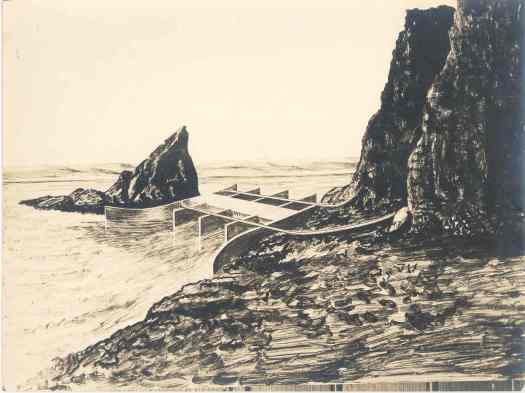
Cutten and Clarkson’s attempt to harness the Fundy tides wasn’t the first.  Documents discovered decades ago at Acadia University, dated 1908, indicated that a grand plan was made to span the Bay of Fundy from Cape Split to Spencers Island, a distance of about five kilometres.  Sketches in the document showed a causeway with dynamos that would generate electricity, along with a highway and train tracks.  This may have been a “paper plan” only since no other documents have been found indicating the project proceeded beyond this stage.

Artist's conception of harnessing Fundy tides

An artist’s conception of how turbines would be installed at the foot of Cape Split to generate electricity from Fundy tides.

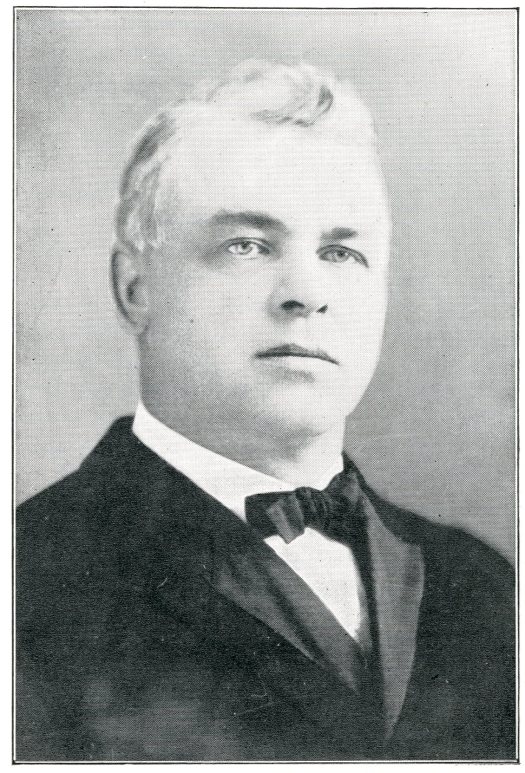
Acadia University president Dr. George B. Cutten

Acadia University president Dr. George B. Cutten was one of the main movers in the 1916 plan to harness the Fundy tides.