THE DYKES – CHAOS WILL COME AGAIN (July 1/08)

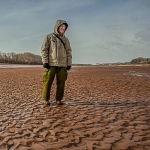
“The sea is not weary. Its vast impersonal force moves tirelessly to destroy the work of men’s hands; and if the dykes are neglected, chaos will come again,” Dr. Watson Kirkconnell said in 1948, on the occasion of his installation as President of Acadia University.

Dr. Kirkconnell was referring to the ongoing, never ceasing struggle against the sea to maintain the “humble barricades of sod and earth” that are the dykes of Kings County. In 1944, a few years before Dr. Kirkconnell made these remarks, he was reminded of how relentless the sea is when the aboiteau on the Habitant (Canning) River collapsed and hundreds of acres of dykeland were flooded.

Kirkconnell undoubtedly had this disaster in mind when he commented about the never ending struggle against the sea. But being a historian as well as a man of letters, Kirkconnell was well aware that since the Acadians began dykeing in Kings County, one disaster after another plagued them and the Planters that followed. In most cases, an unusual combination of tides in Dr. Kirkconnell’s sea that “is not weary” and great windstorms caused the disasters.

The serious breaks in the dykes plaguing the Acadians were rarely recorded. This wasn’t the case after the planters arrived and the dyke disasters after the expulsion are for the most part on record. One of the worst disaster occurred a few years after the expulsion. Between 1755 and a few years after arrival of the Planters in 1760 the dykes were largely left unattended and deteriorated rapidly. Thus when a great gale, combined with high tides, struck the Kings County dykes in 1759 the result was catastrophic.

Several years ago, historian Regis Brun of the Universite de Moncton sent me a quote from the diary of Colonel Fry regarding the gale. Dated November 4, 1759, it read: “Tremendous gales of wind & Surprising Sea that in the course of Providence happened this day.” Brun wrote that this was a storm that “marked its (Nova Scotia’s) history.”

In Kings County, Brun said, the great storm damaged the “aboiteaux and levees constructed by the Acadians, some going back to the 1680s.” Storm damage was widespread elsewhere in the province, but the greatest damage occurred wherever there were dykes.

The sea again proved that it was relentless and far from being weary when the Saxby Gale struck in 1869. Besides the 1759 storm and the Saxby Gale, Brun writes that disaster struck the Acadian dykes on the Minas Basin in 1711. He mentions as well the “1775 gale that killed 2,000 people.”

The great tide that removed some 1,500 tons of rock from the Canning River aboiteau in 1944 is proof that despite centuries of experience in dyke building, there’s still much to be learned. And with global warming and the possibility that sea levels will rise, Dr. Kirkconnell’s observation that chaos will come again sounds prophetic.

ERNEST L. EATON – THE “OTHER EATON HISTORIAN” (June 24/08)

While he didn’t write on as grand a scale as Arthur W. H. Eaton did in his history of Kings County and other works, the late Ernest L. Eaton was no less a historian.

I feel that Ernest Eaton’s status as a historical researcher and writer should be recognized during Planter celebrations later this year. No other historian besides his distant cousin Arthur delved into Kings County Planter history as much as Eaton did. Immediately comes to mind his ground- breaking work on determining the exact location of the original Planters grants in Kings County.

The documents laying out the original grants in the Cornwallis Township of Kings County had been lost – folklore has it that they “mysteriously disappeared” or had been destroyed in a fire. It was Ernest Eaton who with a fine bit of research mapped the location of every grant. In effect, Eaton had recovered the long lost plan of the Cornwallis Township farm lots. His findings, which included a detailed survey plan, were published in 1981 in the Nova Scotia Historical Quarterly and are an important contribution to Planter history.

Among Eaton’s other historical papers that are worthy of note is a study of the dyke lands published in 1980 in the Nova Scotia Historical Quarterly. Devoted to the evolution of the dykes beginning with the French period, the paper is a mini history that concludes in the late 20th century. For anyone interested in the dykes and how they evolved during the Planter period, this is an invaluable overview.

Eaton also wrote about shipbuilding in Kings County in the Planter period. As well, he was interested in the Acadian cellars found on and around his farm in Upper Canard, and I believe from talking with him that he examined more than a few. He contributed several articles on the Acadian cellars of Upper Canard to The Advertiser.

Some of Eaton’s research on the Planters was never published. Fortunately, this is being remedied. The Eaton family website contains many of Eaton’s unpublished historical works; it is updated constantly and should eventually contain most of his historical writing.

THE SIX ROD ROAD AND AROOSTOOK (June 17/08)

Until Canning historian Ivan smith enlightened me, I had never heard of the Aroostook War, a 19th century “disagreement” between Canada and the United States.

In brief, the Aroostook War was a dispute in the 1830s over the boundaries of New Brunswick and Maine. Ivan Smith tells me it came close to a shooting war between Canada and the United States (key in Aroostook War in Google for the full story) and it looked for a time that Nova Scotia would be one of the main theatres.

I mention the Aroostook War since it may tie in with a topic I’ve written about numerous times in the last five years – the Six Rod Road. As readers may recall, the Six Rod Road is believed to have been a major military highway connecting Halifax and Annapolis. The records are hazy on this but folklore says some sections of the road were laid out and remnants of it are still visible in the Valley.

The late Leon Barron did some research on the road and he believed one fork was planned to connect Minas Basin with the Bay of Fundy. Ivan Smith tells me he found several references to a major highway, designated as a six rod road, in Nova Scotia legislature documents from the 19th century. The road apparently was planned, started in places, but never completed. Smith believes we can look to incidents like the Aroostook War to explain why this major roadway was conceived.

In 1849, anti-British sentiment was high in the mid-19th century following the Aroostook dispute, “and Great Britain and the United States were close to outright war,” Smith says. At the same time, distractions in Great Britain may have convinced the States that the time was ripe to invade Canada. Smith surmises that the first step in an invasion would be to capture Nova Scotia, hence blocking any reinforcements sent from Britain.

Aware of this possibility, Smith says, “the Six Rod Road could have been planned as a way to get troops quickly in force from Halifax to Annapolis, if there was an invasion.” This threat fizzled out, Smith concludes, when the States became involved in a civil war and a major artery was no longer required.

Undoubtedly, there are documents in the archives in Ottawa or Great Britain pertaining to the great Six Rod Road. But for now, all we can do is speculate on Six Rod Road folklore, and wonder how many existing roads are sections of this great highway. Leon Barron tentatively identified one stretch of road in Kings County that was rumored to have been a piece of the Six Rod Road. While he dug into a lot of archives documents in Halifax, looking for evidence to this effect, he was unable to find anything conclusive.

THOSE VANISHING COMMUNITY HISTORY BOOKS (June 10/08)

They’re not collectibles or rare, but there are many village and community history books that are difficult to find today.

Take the original edition of the history of New Ross, for example. While there are likely numerous copies of this book in private bookshelves around the countryside, you can’t purchase one anymore. I know; I tried for a long time to add one to my collection of local history books.

Eventually I found a copy of the New Ross history in Maine by going through a website called Abe Books. I recommend this site if you’re looking for out-of-print books of any sort.

Another book difficult to find is Anne Hutten’s Valley Gold. This is an excellent history of the apple industry in the Valley, but try to find it for sale anywhere and you won’t have much luck. The same goes for the history of Greenwich by Edythe Quinn. This book was published in 1968 and while I’m sure there are lots of copies lying around somewhere, it rarely shows up at yard sales or the used book shops.

The Port Remembers, the history of Port Williams, is like the books by Hutten and Quinn – well-written and scarce. Undoubtedly, hundred of the Port Williams history and the books by Hutten and Quinn were printed and sold, but there must be some black hole out there that devours community histories. These three books have vanished and why is a mystery to me.

Another community history I haven’t seen in years is the one on Sheffield Mills, which I believe is called Grist from the Mills. I can’t remember the title of another community history about Woodville (The Homes of Woodville perhaps?) but this book has suffered the same fate as Valley Gold and the histories of Port Williams and Greenwich. Adora Phillips history of Bishopville has disappeared as well, along with Heather Davidson’s short history of Kentville and Watson Kirkconnell’s book on place names of Kings County.

I’ve been told that some years back a history of Scots Bay was published. Of all the books I’ve mentioned above, this history must be one of the rarest. If a reader has a copy, I’d like to hear from them.

EXCAVATING AN ACADIAN HOMESTEAD (June 3/08)

In his talk at the Wolfville Historical Society in May, one of the works Maynard Stevens quoted from was The French Period in Nova Scotia. A.D. 1500 – 1758 by John Erskine. Published in 1975, Erskine’s book, which he calls a historical, archeological and botanical survey, has several references to Acadian homesteads in New Minas and an overview of Acadian settlements along the three main streams in Kings County, the Cornwallis, Habitant (Canning) and Gaspereau River.

An interesting aspect of this work is Erskine’s means of locating Acadian sites. The presence of various plants and trees favored by the Acadians and “less dear to the New Englanders,” are indicators of possible Acadian homesteads and mill sites, Erskine writes. He mentions that homestead sites with these indicators can be found in New Minas and at a mill site between the village and Kentville. For anyone interested in checking them out, these botanical indicators are mentioned in the Blomidon Naturalists Society’s publication, A Natural History of Kings County.

But back to Erskine’s evidence that New Minas was once the site of Acadian homesteads. Erskine did some archeological surveys in New Minas, describing what he calls a typical Acadian homestead he excavated at an unnamed location. The dimensions of the house “seemed to be 25 x 12 feet,” with walls eight feet high and “probably of squared logs,” he writes. The house has a cellar that was about six feet deep with a floor of “rough stone paving.” Nearby is a root cellar some four feet wide at the bottom.

Erskine determined that one end of the homestead’s kitchen was paved with “long blocks of slate driven edgewise into the soil.” Here he found the remains of a hearth which was “walled with stone mortared with clay.” Above the hearth were the remains of the collapsed chimney, a “pile of much clay and occasional stones.”

Erskine notes that “not a nail was found in the whole site” making it probable the roof was of thatch. “The very thorough burning of the logs confirmed this,” he continued.

This reference to burned logs is intriguing. Is Erskine suggesting the New Minas homestead was burned down by New England soldiers, as were most Acadian homes in Kings County and in the area around Falmouth and Windsor during the expulsion?

THE ACADIAN SETTLERS IN NEW MINAS (May 27/08)

“Before there were malls and Wal-Mart, before there were fast food places and world-famous soccer tournaments, before the arrival …. of the New England Planters, before all of the above, there is an almost forgotten history here,” Maynard Stevens said in a talk last week at the Wolfville Historical Society.

That almost forgotten history is the fact that New Minas was once part of an Acadian settlement in this area. “New Minas has an Acadian heritage,” Steven said, noting that while the Acadian settlement isn’t “as famous as Grand Pre or as celebrated as Evangeline,” it is an important part of what makes the village a special place historically.

New Minas may have been settled by Acadians from Port Royal as early as 1682, Stevens said. “History tells us this was …. Pierre Teriot and his young bride, Cecile Landry. They came to this area about 1682 and are credited with being the founders of the village of St. Antoine.”

While St. Antoine, of which New Minas was a part, soon became as large as Grand Pre, Stevens said, there is little physical evidence remaining today of the settlement. Stevens mentioned a research paper by John S. Erskine and Arthur W. H. Eaton’s Kings County history as two of several works referring to an Acadian settlement in New Minas.

However, there’s a lot of local folklore about the Acadian presence, Stevens said. He told the Society about a tour he conducts through the village that covers possible homestead sites and what may be an Acadian cemetery only a few minutes walk north of the business centre.

Acadian homesteads may have been located just below the intersection of Jones Road and Lockhart Drive, Stevens said. “Over 250 years ago …. there would have been numerous Acadian farms and farmland all around us. They would have dotted both sides of Jones Road and stretched eastward along Lockhart Drive.”

A site near Oak Island, just north of the business section and along the Cornwallis River, has tentatively been identified as an Acadian cemetery, Stevens said. He mentioned as well the folklore concerning an Acadian orchard near the river, and an Acadian chapel off Lockhart Drive.

Unfortunately, other than folklore and references in historical works, there’s no concrete evidence of an Acadian presence in New Minas. Undoubtedly, New Minas was once part of an Acadian settlement, but how Arthur W. H. Eaton and John S. Erskine determined this and wrote about it can only be speculated on. We await archeological evidence of an Acadian presence, Stevens said in effect, and that may be forthcoming in the near future. Stevens said there is interesting in conducting an archeological dig in the cemetery and in areas believed to have been Acadian homestead sites.

THE SETTLERS OF “YE TOWN OF CANARD” (May 20/08)

In 1758 and again in 1759, the governing council of Nova Scotia issued proclamations in the Boston Gazette stating that the opportunity was presented for “peopling and cultivating …. lands vacated by the French.” The proclamation might have been misleading since some 54 settlers who signed up to come to Nova Scotia possibly expected to dwell in an area where there was a town.

In the Public Archives of Nova Scotia is a document from 1759 containing a list of approximately 54 settlers who were destined for “Ye Town of Canard” in the Kings County township of Cornwallis. The document is listed in the bibliography titled New England Planters in the Maritime Provinces, and it is a preliminary list of persons prepared to settle in Kings County.

As mentioned before, while the bibliography contains only a summary of each document, this is enough to get a few glimpse of the early Planter period in Kings County. Some of the summaries tell a tale or two, some tell us settlers may have had misconceptions about what they would find here, such as believing a town might exist in Canard.

One of the documents indicates that during the American Revolution, some of the Planter settlers in Kings County expressed sympathy with their country of origin. It appears that Nova Scotia’s governing council had grounds to be concerned. In the Archives is a notice date early in 1778, requiring that “all persons in Kings County who have not taken an oath of allegiance to King George III must do so before the end of June.”

But enough of this serious stuff. Farm animals running wild and untended must have been a problem early on in Kings County. In the Archives, for example, is a document called an Act of the Grand Jury of Kings County from the year 1776. Said document states that no boars may run at large in Kings County between June 1 and December 31. Farmers allowing boars to run wild faced stiff penalties.

Sheep must have been a problem in that time as well. A similar document from 1777, also an action of the Grand Jury of Kings County, (which indicates the seriousness of the problem was) states that sheep being moved from one township to another must be marked and inspected.

Possibly creatures of the wild, as well as roaming domestic animals, were a problem for the Planters in the early days. A couple of documents in the Archives refer to bounties being paid in 1788 for bear, fox and wildcat skins. A 1797 document states that the bounty on bearskins was discontinued in that year.

WHEN KINGS AND HANTS COUNTY WERE ONE (May 13/08)

Kings County was one of the original five counties of the province and as I’ve pointed out before in this column (column 1, column 2), it included most of what is now Hants County, and part of what is now Cumberland County and Colchester County.

If you weren’t aware of this, some of the references to the Kings-Hants area in community history books and documents, covering the period from 1759 to 1781, would be puzzling. The five original counties were established in 1759, several years after the Acadian expulsion and a few years before the Planters arrived. Kings County remained king-sized until 1781 when Hants County was created.

History books and archive documents have numerous references to the confusing 22-year period when Kings and Hants County were one. Even some of the early writers who chronicled this period appeared to confuse the boundaries of Kings and Hants. For example, in 1889, when Henry Youle Hind published a book on an old burial ground in Windsor, he thought it necessary to describe fishing activities on the Canard River, which rises a few miles north of Kentville.

Reading a bibliography of Kings County documents stored in the Public Archives, I found other references to the 22-year period before Hants County was formed. In the Archives is a record of monies collected in the townships of Kings County to repair the jail at Horton, which must have been constructed sometime between 1765 and 1773. Two of the Kings County townships mentioned in this document are Falmouth and Newport which became part of Hants County.

Similar documents fail to distinguish between what is Kings County then and Kings County after 1781. One dated 1763 is a petition from residents to unite one section of Kings County with another by having a road built from Fort Edward to Cornwallis Township. Apparently there was no action on this petition. Four years later, in 1767, the good citizens of Kings County again petitioned the government, asking that Cornwallis and Horton Townships be connected by a road to Pisaquid (Windsor); the petition requested that said road should have at least three bridges.

Any documents of this nature would be mystifying if you had no knowledge of what transpired here in the early decades following arrival of the Planters. Unfortunately, some historical writers assume you know your history and they neglect to tell you Kings County once took in most of the eastern end of the Valley and butted on Halifax County. I hope that now the references to Hants County places being in Kings County will be no longer be puzzling.

EARLY CORNWALLIS RIVER FERRIES, BRIDGES (May 6/08)

From a historical viewpoint, the Cornwallis River wasn’t much of a factor in the early settlement of Kings County. Early on, for example, the Acadians realized that dykeing the Cornwallis and building aboiteaux wasn’t worthwhile since relatively little land could be reclaimed from the sea. The Canard River, on the other hand, was ideal for dykeing, and soon after settling here the Acadians concentrated their efforts on it.

The Cornwallis River, from just above Kentville down to the Minas Basin is muddy, treacherous, turbulent at high tide, and unfriendly at low tide. As far as early settlers were concerned, the river’s only saving grace was its huge shad runs. For generations, the lower area of the river offered a productive, much needed fishery, a sort of kitchen industry providing food and fertilizer.

Reading the archives at Acadia University, I discovered that Esther Clark Wright once considered writing a book on the Cornwallis River. Apparently she started to put together some of the river’s history. We can only surmise that she dropped the project when she found there was little of interest historically to write about the river.

However, while the Cornwallis was for the most part ignored by the Acadians, the Planters quickly found that the river had an annoying featuring. Literally, the river split apart their major settlements in Kings County and was an impediment when it came to agricultural and social intercourse. Ferries became a necessity early on; several sources claim that the Acadians and later the Planters operated a ferry on the river just below Port Williams.

Arthur W. H. Eaton in his Kings County history writes that the first bridge on the Cornwallis River was “built at least as early as 1780” at Port Williams. The editors of the Port Williams history (The Port Remembers) state that the date of the bridge is “controversial;” meaning, I assume, that no one knows for sure when the first bridge at Port Williams was constructed.

In 1769, a petition signed by 25 inhabitants of Kings County (Cornwallis Township) requested that the price of “ferriage” on the Cornwallis River be reduced. We can assume this document, which is in the Public Archives of Nova Scotia, indicates there was no bridge on the river at that time.

Another document in the Archives makes Eaton’s 1780 bridge date questionable since a ferry was running much later than this. Dated 1792, this document is an application to raise ferry prices on the Cornwallis River to 15 pence for a man and a horse. It’s amusing to note that the rate increase was requested because the ferryman was required to transport jury members free of charge.

Of course, a ferry could have operated on the Cornwallis River after a bridge was constructed. Arthur W. H. Eaton indicates that a bridge definitely was in place at Port Williams by 1818; he mentions legislative records relating to rebuilding and repairing said bridge. On the ferries, I’ve been unable to determine when they stopped operating on the Cornwallis River.

THOU SHALL NOT SWIM ON SUNDAY (April 22/08)

In 1786, Kings County constable Samuel Witter lodged two charges “against individuals” for breach of the Sabbath. One of the charges involved “several apprentice boys swimming in the river.” The other charge Witter lodged was against three men who were seen carrying scythes on Sunday.

In 1787, one David B—— of Kings County was indicted by a jury and found guilty of “profane swearing.” Apparently David committed his offence in public. He was fined two shillings.

Obviously it was against the law to swim on Sunday in Kings County in the late 18th century. It also was an offence to mow hay on Sunday; you could even be charged for carrying work tools on Sunday even if you had no intentions to use them. You couldn’t swear in public either, Sunday or otherwise.

Looking at how liberal the laws are today – or how liberally they’re interpreted – and realizing they were once rigorous and strict to the point of being ridiculous is difficult to comprehend. Your mind kind of boggles when you read that swimming or simply carrying farm tools on Sunday was a crime in the eyes of the law.

This was the case, however. It seems that in some instances, the Planter settlers of Kings County were puritanical to the extreme, and their laws were strict and unforgiving. There’s a document in the Public Archives of Nova Scotia (PANS) for example, indicating how harshly lawbreakers could be treated. Dated 1784, the document is an invoice and itemized account on the cost of apprehending and keeping prisoners in the Kings County jail. In the list of items in the invoice are “irons,” a “pilory and a catt,” (sic) and the cost of hiring a “man to whip a criminal.” The “catt” must refer to a cat-o’-nine-tails which a man hired to “whip a criminal” would necessarily require.

A similar document, dated 1800, contains Grand Jury actions dealing with matters such as enforcing the laws against horse racing and with the construction of stocks and whipping posts. Beware, ye who would race horses or break the Sabbath, in other words.

The documents on Constable Witter’s charges and the trial of David B—— can be found in PANS as well. There’s a bibliography of hundreds of similar documents in PANS, dating between 1759 and 1800, in the book New England Planters in the Maritime Provinces. As mentioned in a previous column, the book can be found in the reference section of the Vaughan Memorial Library at Acadia. The contents of the documents listed in the book are summed of in one and two brief sentences and you can get the gist of what they contain at a glance. To read the entire document would require a visit to the Public Archives in Halifax.

As well as the documents that I’ve mentioned regarding laws, I found numerous references in the book about Kings County jails, and early Cornwallis river bridges and ferries. These documents will be discussed in a later column.