Pte GLEN ALLEN OF MELANSON – HIS WARTIME STORY (November 5/19)

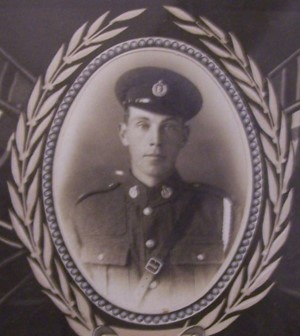
In World War 2, late in 1944, Kings County native Pte. Glen Allen, an infantryman with the Royal Hamilton Light Infantry was missing during the battle to liberate Holland. Allen’s fate wouldn’t be known for months. Was he wounded and stranded somewhere on the battlefield, a fatality, a prisoner of war? The Canadian military couldn’t provide answers, but a lady did, a Scottish lady who lived over 2,000 miles away from Allen’s home and far from the battlefield. This is Pte. Allen’s wartime story, a story about good arising from Nazi wartime propaganda, and a tale about an amazing connection across the waters.

Midway through 1944 the Royal Hamilton Light Infantry (RHLI) fought their way through Normandy as part of 2nd Canadian Division’s assault on France. In their ranks was a young private from Melanson. He had enlisted in Halifax and after basic training in New Glasgow was posted out of the province to the RHLI, a common practice when regiments were undermanned.

Continue reading

OLD-TIME NEWSPAPERS, OLD-TIME POLITICS (October 22/19)

In the spring of 1873, a group of Kentville businessmen pooled financial resources, formed a publishing company and started a semi-weekly newspaper. Joseph A. Cogswell, a prominent local printer, was installed as manager and editor of the newspaper, which was given the grandiose name of The Western Chronicle.

This wasn’t the first newspaper published in Kentville, nor was it the first published in Kings County. That honour possibly belongs to the Kings County Gazette, which was published in Canning for a short while starting in 1864. I say “possibly” since various publications that could be called newspapers started around the time the Kings County Gazette appeared; among them were The Acadian in Wolfville and The Star in Berwick.

Continue reading

POLITICAL PATRONAGE, INSIDER TRADING, OR WHAT? THE CAMP ALDERSHOT STORY (October 8/19)

In a book published in 1983, Brent Fox speaks of the “old Camp Aldershot” (at one time on the plain near Aylesford) and the “new Camp Aldershot,” about a kilometer or so north of Kentville.

In what was a history of the military base, Fox said there was little to speak of in the way of facilities in the new Camp Aldershot when it was first opened. As it turns out, there was gold there of a different kind, but Fox gives the impression that the new camp was a barren plain with scattered stands of pines (hence the local name for the area, Pine Woods). He conceded there were “several farms” in the area, a race track and two mills, but that was about it.

However, the research Gary Young is conducting on Pine Woods indicates there were more than several farms in the area comprising the new Camp Aldershot. Most of the 2,500 acres of Camp Aldershot and most of the adjacent land had been farmed for generations and were included in Planter Grants. This is indicated clearly by Young’s meticulous searching of old deeds and land transfers.

Continue reading

AN HISTORIC FOUR-ROAD INTERSECTION (September 24/19)

It would likely take years of research to dig up and document the historical connections of a unique confluence of roads in Kings County. At this confluence, Upper Church Street, Lanzy Road, Campbell Road, and Oakdene Avenue converge on Highway 341 just north of Kentville. At that point, if two vehicles were driving from the north and from the south on Highway 341, and vehicles on the roads were driving to the highway, it’s possible that all six could meet head on.

All the roads mentioned, including the highway, are historical to some degree. There are Planter and Mi’kmaq connections; at least one of the roads is of Acadian origin and another has connections with Black Nova Scotians.

Continue reading

SKODA – WOLFVILLE’S PATENT MEDICINE FACTORY (September 10/19)

“Wolfville is likely to have a new industry,” a Maritime trade magazine (The Critic) announced in its November issue in1891. Quoting a piece in Wolfville’s newspaper, The Acadian, the magazine reported that a “laboratory is to be built at once for the preparation of a class of German-American remedies, approved by the best science of the day.

“The Skoda Discovery Company is the name of the corporation. It is composed of a number of American gentlemen, who are putting the same line of remedies on the market in the United States, and under a Dominion patent are about to start a Canadian branch of their business in this village.”

The success of the enterprise may reasonably be expected, the notice in the newspaper concluded. George W. Borden, a prominent Wolfville resident and businessman, whom the Wolfville history, Mud Creek, identifies as a Skoda stockholder, was named as the superintendent of the factory’s construction. Borden was a town councilor for at least seven terms, a position he may have used to ease Skoda’s move to Wolfville.

Continue reading

GOLD MEDAL WINNING COMPANY ORIGINATED IN CANNING (August 20/19)

As reported in the Federal Sessional Papers, dated March 25, 1886, the Kerr Vegetable Evaporating Company of Canning displayed its products at the Canadian exhibit in the International Exhibition, Antwerp, Belgium. In the papers, a letter from Charles Tupper to the Hon. Secretary of State, Ottawa, presented the results of Canada’s participation in the exhibition, noting that the Kerr Company received honorable mention.

In the February 6, 1891, issue of the Canadian Manufacturer Magazine reported that according to the Kentville NS Star, the Kerr Vegetable Evaporating Company “have received an order from the British admiralty office for the supply of nearly 10,000 pounds of evaporated vegetables for the British navy.” Kerr, said the magazine also are “receiving large orders from the United States and Upper Canada.”

That same year, the Kerr Company, again showing its evaporated vegetable line, represented Canada at the 1891 International Exhibition in Kingston, Jamaica. As reported in the Federal Sessional Papers, Kerr, now located in Kentville, received a gold medal for its products.

Continue reading

EATON’S HISTORY, SCALPING BOUNTIES, CANNING’S FATE (August 6/19)

In the History of Kings County, Arthur Wentworth Hamilton Eaton mentions a little-known historian, Dr. William Pitt Brechin, and his genealogical research. Included in the county history is Brechin’s brief account on the origin of Kings County roads.

However, as Doug Vogler pointed out in a post I received recently, “many do not know that the bulk of the research for the history… was done by Brechin,” which was something Eaton downplayed.

In his ongoing search of earlier newspapers and other publications, Vogler often comes up with little-known historical nuggets like this about Kings County. In a January 1904 issue of the Berwick Register, for example, Vogler found evidence that someone other than Eaton contemplated writing a history of Kings County. The evidence is in a letter J. Calder Gordon wrote to the Register, indicating he was planning a county history based on the “considerable work” done by Brechin. Gordon wrote that he was “gathering additional material to complete (Brechin’s) valuable work.”

Continue reading

ACADIAN DYKING SPADES – UNIQUE, ANCIENT AND RARE (July 23/19)

In the book Sods, Soil, and Spades, marine biologist J. Sherman Bleakney writes that it is doubtful few if any of the dyking tools the Acadians used in the 18th century can be found intact today. Bleakney had in mind the spade the Acadians used to build dykes, a tool with a centuries-old history.

However, given its long history, Bleakney said he could easily imagine dyking spades becoming worthy of study. He referred to the spade as “a collectible item of historical significance.”

Bleakney offers just enough history on the Acadian spade to intrigue potential researchers. Take the spade’s origin, for example: While perfected as a dyke building tool by the Acadians, its forerunner was found in the coastal areas of France long before French settlers brought it here in the 1600s. In the book A Great and Noble Scheme, John Mack Faragher notes that “the Acadian spade… bears a strong resemblance to the French saltmakers’ fraye, used for maintaining the earthen wall surrounding salt pans.”

Continue reading

RE PRESCOTT HOUSE (July 9/19)

Within a year of his death in 1859, Charles R. Prescott’s estate in Starr’s Point was on the market.

On September 8, 1860, the Halifax issue of The British Colonist carried an advertisement notifying the public the Prescott property would be sold at a public auction. The property was described as “one of the most desirable situations (in Nova Scotia) for a gentleman who may wish a country residence.” Following a detailed description of the house and outbuildings, the advertisement noted that the 100-acre property contained orchards with a great variety of “the choicest fruits in the province.”

If we fast forward about 70 years, we find that after passing through a succession of owners, the Prescott house is in ruins. The house had been abandoned for several years when around 1930 Charles Prescott’s great-granddaughter purchased it. Mary Allison Prescott restored the house and took up residence there (circa 1940) with her two sisters. When Mary Allison Prescott died in 1969, as per a previous agreement with her, the house was taken over by the Nova Scotia Museum.

Continue reading

APPLE BLOSSOM FESTIVAL – A CASE FOR HANTSPORT AS THE FESTIVAL PIONEER (June 18/19)

Capt. Ray C. Riley of Hantsport is on a crusade.

For decades, Riley has been striving to have Hantsport recognized as the original home of the apple blossom festival; and he may have a point. “The bottom line is that when it comes to the festival, Hantsport was first in holding an apple blossom celebration in the Valley,” Riley said when I talked with him recently. “Kentville was a latecomer and it only took over the festival after it became too big for Hantsport.”

To substantiate this claim, Riley has researched and written a history of Hantsport’s festival celebrations, which began in 1927. The history follows below, but first we should note that no one questions Riley’s statement about Hantsport holding several celebrations with apple blossom themes at least six years before Kentville. Hantsport had its apple blossom queens and its apple blossom balls in the 1920s, just as Kentville did when it started what became a Valley-wide festival in 1933.

Continue reading