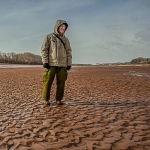
HISTORICALLY SPEAKING – THE AVON RIVER RULES OVER THE CORNWALLIS (December 13/22)

References to the Mi’kmaq fishing and hunting in earlier times on our rivers can be found in various historical documents. In this area, two of our largest rivers, the Avon and the Cornwallis, were recorded as major sources of fish, fowl, and game for the Mi’kmaq.

Both rivers also were tremendous sources of wild foods for the Acadians. Later settlers, the Planters and Loyalists, harvested fish and fowl on these rivers as well.

A major resource for fish, fowl, and game is only one characteristic the Avon River and the Cornwallis River have in common. Both are tidal, of course, and flow into the Minas Basin. As the crow flies, to use an old cliche, their estuaries are relatively close.

Continue reading

MAKING A GREEN AND PLEASANT LAND – MORE VIEWS ON THE DYKELANDS (October 4/22)

In this column, I recently covered the contrasting views historians have on the Acadians and the dykelands, quoting, in turn, Brent Fox, J. Sherman Bleakney and L.S. Loomer.

The column should have included quotes by Arthur W. H. Eaton, the author of History of Kings County, John Mack Faragher and Esther Clark Wright. Eaton wrote about the “important work of dyking the marshes, that the Acadians had long pursued,” and he described the various problems the Planters faced in maintaining the dyke system.

Faragher devoted several pages to the origin of dyking in Nova Scotia: “In one of the most remarkable developments of 17th century North America,” he observed, “French settlers in l’Acadie developed a distinctive agricultural economy based on the farming of reclaimed marshland, diked in from the tides.”

Continue reading

WRITERS AND HISTORIANS HAVE CONTRASTING VIEWS ON ACADIANS AND THE DYKELANDS (September 20/22)

In an unpublished paper about building the Wellington Dyke on the Canard River, Brent Fox speculates that the dyke-building expertise of the Acadians possibly could have Dutch origins.

“The people of the Netherlands have been noted for [dyke-building] for many centuries,” Fox wrote. “In an indirect manner, it is possible that [centuries ago] the Dutch provided the special knowledge that helped convert the marsh and tidal lake areas of present-day Kings County into… valuable agricultural land.”

 In various papers I’ve read on the Acadians and dyke-building I’ve never found any references to historic Dutch connections. We could assume that Fox was speculating about this connection, but he may not have been. Further on he writes that in the 16th century, “Dutch engineers were brought into France to oversee massive dyking projects.”

Continue reading